MachineValley makes tile adhesive plants at three levels of automation. The manual line is a hopper, screw conveyor, and ribbon blender with hand-operated discharge and bagging, the budget-friendly way into dry-mix production. Semi-automatic line adds a storage silo and paddle-controlled bagging, so less manual handling but still no full automation cost. Fully automatic line runs two screw conveyors, a helical-agitator blender, and an automatic packer under the silo, for manufacturers producing 2 to 10 tons an hour who don't want bagging tying up labour.
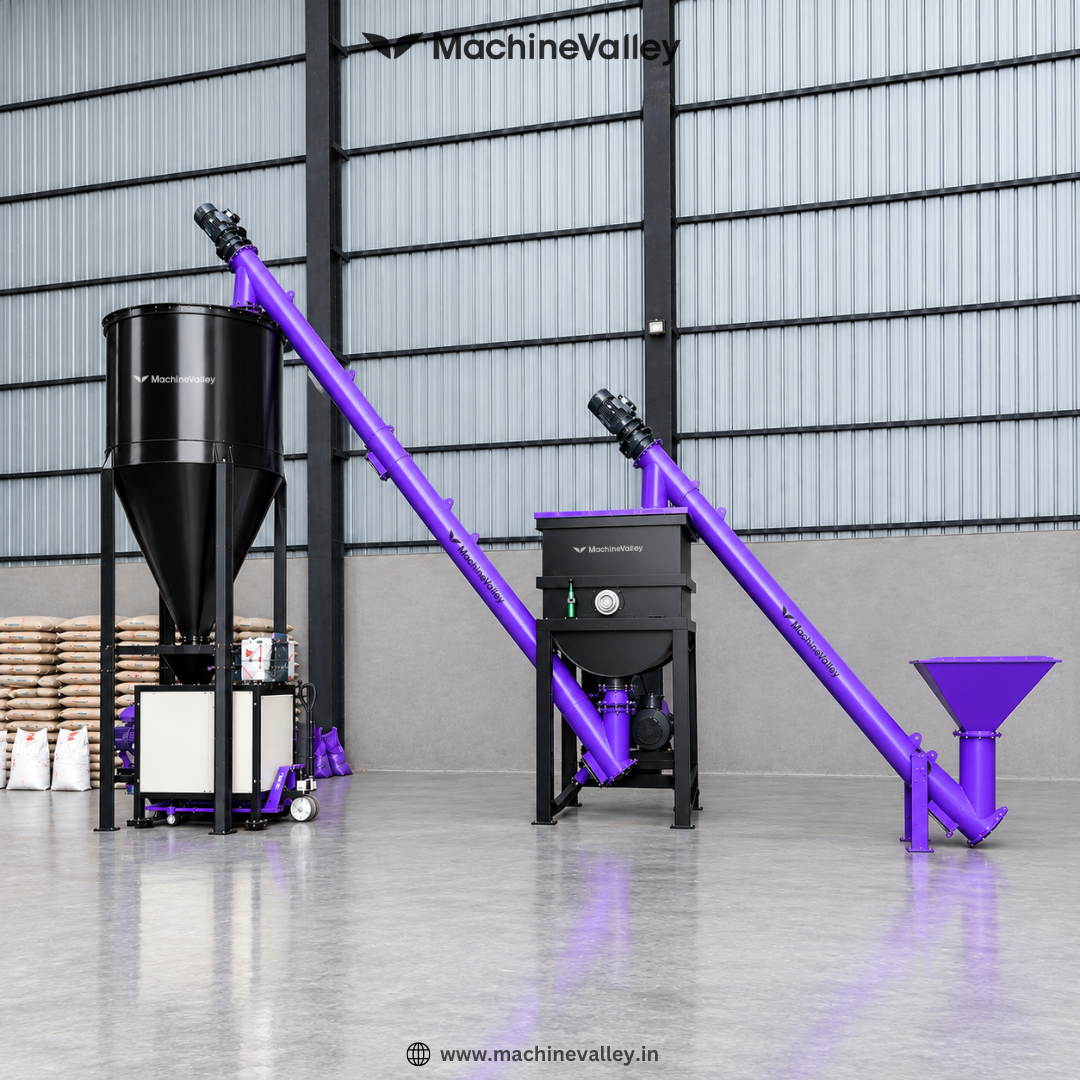
MachineValley Fully Automatic Tile Adhesive Plant working process is very simple: it lifts raw material into a Ribbon Blender Mixer with one Screw Conveyor and mixes it for 15-20 minutes. A second, heavy-duty screw conveyor then carries the mixed batch to a storage silo, and a packing machine underneath the silo bags it as per your standard.
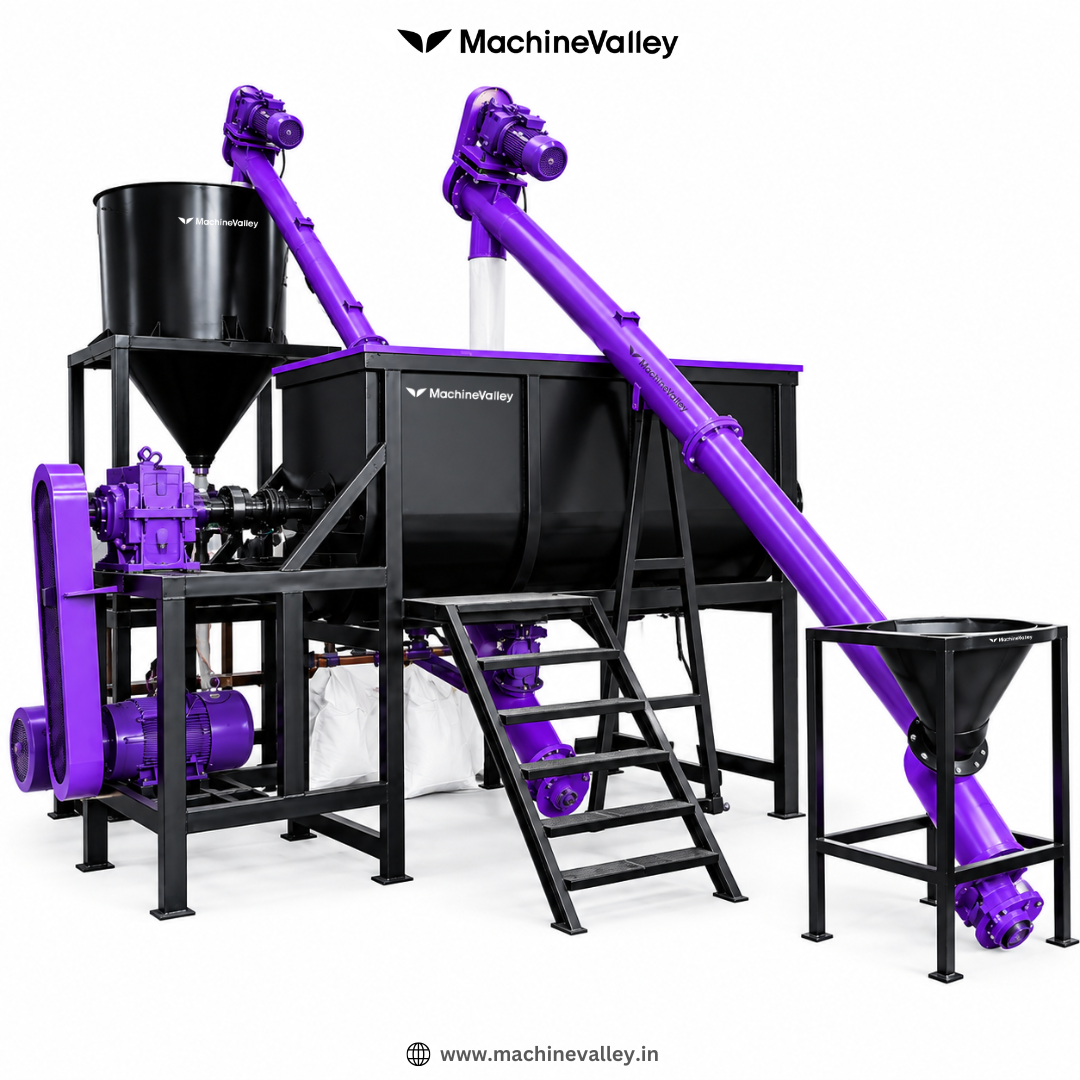
Our semi-automatic dry mix line handles tile adhesive, wall putty, and similar dry powder construction chemicals. Material goes from the hopper through a screw conveyor into a ribbon blender, gets mixed, then sits in a storage silo until it's fed out through a manual, paddle-controlled bagging station. The result: consistent product with less hands-on labor than a fully manual setup.
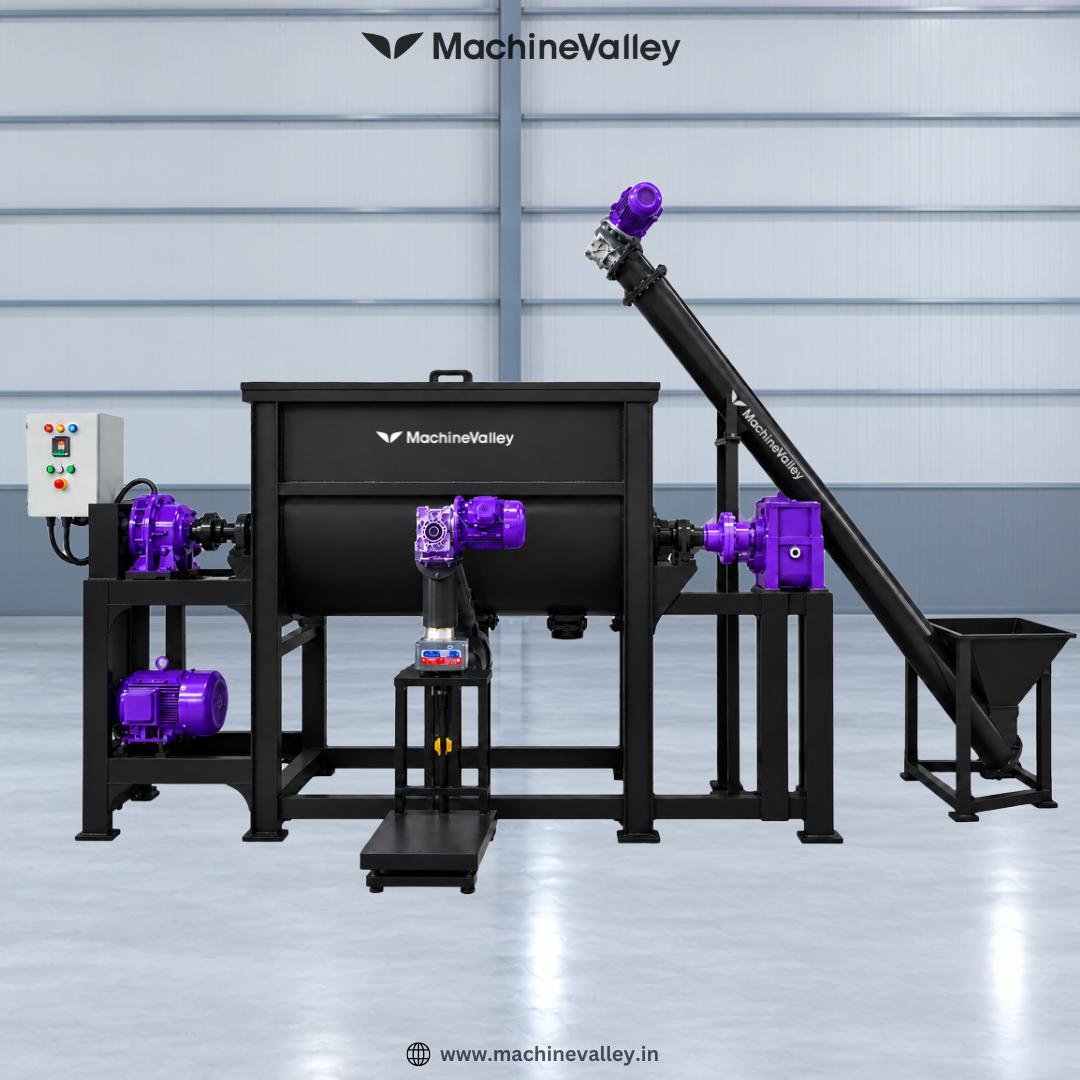
Compact Tile Adhesive Manufacturing Plant designed for entrepreneurs looking to start dry-mix production with minimal investment and limited floor space. The setup uses a hopper-fed screw conveyor to load raw material into a Ribbon Blender Mixer, ensuring a thorough 20–25 minute mixing cycle for a consistent, lump-free tile adhesive blend. Post-mixing, the material is discharged through a gate-valve conveyor operated by labour, with bag filling and weighing also carried out manually, keeping the plant simple, affordable, and easy to operate.